
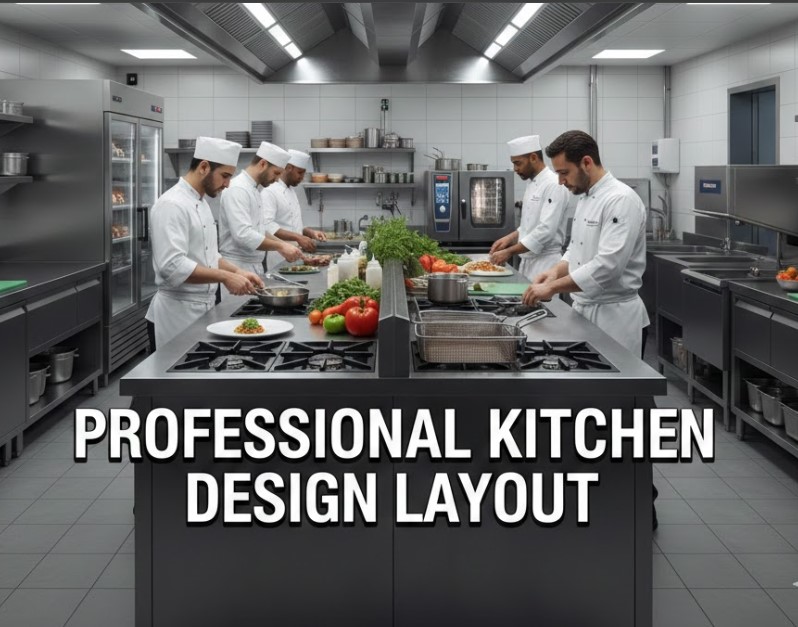
A meticulously planned professional kitchen design layout is not merely an aesthetic choice; it is the backbone of a successful culinary operation.
Every top-tier restaurant, bustling catering facility, or high-volume institutional kitchen understands that the arrangement of equipment and workstations directly impacts efficiency, speed, staff morale, and ultimately, the profitability of the business.
Without an optimized design, even the most talented chefs and dedicated teams will struggle against bottlenecks, unnecessary cross-traffic, and compromised safety standards.
To truly elevate a commercial kitchen from good to great, we must first dive deep into the science and strategy behind its physical structure, recognizing that the spatial relationship between the receiving dock, storage units, preparation stations, cooking line, and dish pit is what creates the essential “workflow spine.”
This strategic flow ensures that ingredients move seamlessly from raw state to finished plate, minimizing steps, reducing fatigue, and maximizing speed; core objectives that differentiate an average kitchen from a world-class culinary machine.
The initial step in any new or renovated culinary venture must be the comprehensive planning of the professional kitchen design layout, as this critical phase dictates the workflow, minimizes long-term operational costs, and ensures compliance with vital health and safety regulations.
Imagine the tangible difference between a kitchen where the pastry station is miles away from the blast chiller, requiring staff to constantly navigate the hot cooking line, versus one where the flow is intuitive and seamless, like a finely tuned machine.
The former scenario leads to exhaustion, mistakes, and slow ticket times; the latter promotes a harmonious, low-stress work environment and consistently fast, high-quality output
Why a Thoughtful Professional Kitchen Design Layout is Your Most Valuable Asset
The initial step in any new or renovated culinary venture must be the comprehensive planning of the professional kitchen design layout. This critical planning phase dictates the workflow, minimizes operational costs, and ensures compliance with critical health and safety regulations.
Imagine the difference between a kitchen where the pastry station is miles away from the ovens, requiring staff to constantly navigate the hot cooking line, versus one where the flow is intuitive and seamless.
The former leads to exhaustion, mistakes, and slow ticket times; the latter promotes a harmonious work environment and consistently fast, high-quality output. The goal is to establish a ‘workflow spine’; a logical path that raw ingredients follow from delivery and storage to preparation, cooking, plating, and service.
Achieving this flow requires a strategic approach that balances space constraints, menu requirements, and the specific needs of the kitchen staff.
The commitment to a superior professional kitchen design layout pays dividends across every facet of the business, transforming potential liabilities into operational strengths.
Maximizing Operational Efficiency and Speed of Service
An optimized professional kitchen design layout directly translates to faster ticket times and greater output during peak service periods. Efficiency is achieved by minimizing the total distance and time staff must travel to complete a task.
In a poorly designed kitchen, a cook might take ten steps to get a pan, twenty steps to grab an ingredient, and another ten steps to reach the plating station. In a well-designed layout, these items are placed immediately adjacent to the relevant workstation, a difference that saves thousands of steps and hours over a year.
By implementing concepts like the “work triangle” (similar to residential kitchens, but expanded into functional zones), and ensuring that all necessary tools and ingredients are within easy reach of the relevant station (mise en place philosophy applied to the architecture), the kitchen can handle a significantly higher volume of orders without increasing staff numbers.
This scalable efficiency is perhaps the most immediate financial benefit of a thoughtful layout, directly impacting customer satisfaction and table turnover rates.
Reducing Labor Costs Through Optimized Workflow
Labor is typically the largest operating expense for any hospitality business, and a superior professional kitchen design layout is an effective, long-term strategy for keeping these costs in check.
When the kitchen flow is logical, staff spend less time walking, searching for equipment, or waiting for bottlenecks to clear, meaning their productive time on task is significantly higher.
For example, a dedicated dishwashing zone that allows for quick scraping and immediate machine loading, positioned away from the cooking line but near the service pass, ensures that front-of-house staff can clear tables and return to the floor faster, while back-of-house staff are not distracted by incoming dirty dishes.
Furthermore, by designing stations to be multi-functional or easily accessible by multiple staff members, the kitchen can often operate effectively with fewer personnel during slower periods, or handle surges without bringing on extra hires.
This inherent efficiency built into the structure of the professional kitchen design layout provides continuous savings on the payroll.
Enhancing Safety and Minimizing Workplace Accidents
Safety in a commercial kitchen is paramount, and the physical professional kitchen design layout plays a critical role in minimizing hazards.
A chaotic, congested workspace is an accident waiting to happen, with risks ranging from slips and falls due to spills to burns from accidental contact with hot surfaces or collisions while carrying heavy, hot equipment.
A well-engineered layout features clearly demarcated pathways, dedicated traffic lanes for cooks versus servers, non-slip flooring materials, and strategically placed safety equipment.
Critical safety elements include sufficient space around the hot line to prevent accidental bumping, proper height and placement of equipment to reduce strain-related injuries, and ensuring that emergency exits and fire suppression systems are unimpeded and easily accessible.
Investing in a layout that prioritizes safety reduces lost workdays, minimizes expensive workers’ compensation claims, and most importantly, protects the well-being of the staff, fostering a responsible and professional environment.
Ensuring Strict Compliance with Health and Sanitation Regulations
Health code compliance is a non-negotiable requirement for any food service operation, and a strategic professional kitchen design layout makes adherence simple and automatic.
The design must rigorously enforce the principles of preventing cross-contamination, which involves separating the distinct stages of food handling: receiving, raw preparation, cooking, and warewashing.
For instance, the placement of handwashing sinks must be sufficient and readily accessible within every designated food prep zone. The layout must also ensure proper separation between “clean” areas (plated food pass, clean dish storage) and “dirty” areas (garbage cans, dish pit).
Additionally, the design influences sanitation procedures by dictating the material choices (e.g., seamless stainless steel surfaces that are easy to clean) and the accessibility of equipment for deep cleaning and maintenance.
A proactive design avoids future penalties and closures by embedding sanitation best practices into the very structure of the kitchen.
Future-Proofing and Adaptability for Menu Evolution
The culinary landscape is constantly changing, and a truly valuable professional kitchen design layout is one that anticipates and accommodates future growth and menu shifts. Designing a kitchen that is too rigid or specific to the current menu risks forcing expensive renovations down the line when a new head chef is hired or a new culinary trend emerges.
The smart layout incorporates modularity and flexibility. For example, opting for versatile combination ovens or planning for utility hookups in areas that are currently storage, allows for seamless incorporation of new equipment without disruptive downtime.
Similarly, utilizing mobile or easily movable stainless steel tables in prep areas allows the space to be rapidly reconfigured to handle special events, different cuisines, or seasonal menu changes.
This forward-thinking approach ensures that the initial capital investment remains valuable for years, making the kitchen an adaptable asset rather than an outdated liability.
Morale and Retention: Creating a Better Working Environment
A thoughtful professional kitchen design layout significantly contributes to staff morale and retention, a critical factor in the current competitive labor market. A chaotic, hot, and cramped kitchen leads to stress, burnout, and high turnover.
In contrast, a well-designed space that minimizes unnecessary movement, provides adequate ventilation, offers dedicated rest areas (if space allows), and ensures clear lines of communication fosters a professional, calmer atmosphere.
When staff can execute their duties efficiently without constantly bumping into colleagues or waiting on equipment, the work environment improves drastically.
This attention to ergonomic design shows respect for the staff’s well-being. Ultimately, a better working environment reduces staff fatigue, decreases turnover rates, and cultivates a loyal, high-performing team that is proud of the space they work in.
The Five Essential Zones in Understanding Professional Kitchen Design Layout
Any effective professional kitchen design layout is meticulously organized around five fundamental zones, each serving a distinct and critical function in the food preparation and service process.
The efficiency and safety of the entire operation hinge on optimizing the placement and relationship between these zones. This intentional structuring of space dictates the flow of ingredients and staff, minimizing backtracking and maximizing productivity.
1. The Receiving and Storage Zone
This zone represents the entry point for all ingredients, supplies, and non-food items entering the operation. A well-designed receiving and storage area is crucial for maintaining inventory control, ensuring food safety, and setting the tone for a smooth operation.
This zone should be located near an exterior delivery door, ideally separate from customer entrances, and feature a robust security system to monitor valuable inventory. The floor plan must allocate adequate space for deliveries to be efficiently unloaded and checked against invoices without causing congestion.
Key equipment here includes heavy-duty industrial shelving (often mobile for cleaning), reliable walk-in refrigerators and freezers that are sized for the operation’s volume, and a designated desk or counter with a certified scale for accurate weighing and quality checks.
The flow must be optimized to move ingredients rapidly into their appropriate temperature-controlled environments to prevent spoilage, a critical aspect of food safety.
Furthermore, proper separation between dry storage, refrigerated goods, and cleaning chemicals is a mandatory health code requirement, making the spatial arrangement within this zone a vital part of the initial professional kitchen design layout.
2. The Preparation Zone (Prep Area)
Often referred to as the heart of mise en place, the Preparation Zone is where raw ingredients are meticulously washed, chopped, portioned, and marinated before being sent to the cooking line. This zone typically requires the largest amount of uninterrupted counter space in the entire kitchen.
Due to the diverse tasks performed here, the area is frequently broken down into sub-sections to prevent cross-contamination, such as separate areas for produce preparation, meat butchery, and cold food assembly (salads, dressings, appetizers).
The layout must include multiple dedicated sinks, specifically designed for handwashing and food washing, strategically placed for easy access.
Essential to efficiency are numerous reach-in refrigerators or refrigerated prep tables positioned right at the workstations to hold prepped ingredients, minimizing the distance staff must travel to the main walk-in units.
Beyond efficiency, ergonomics are a paramount concern here; counter heights must be appropriate to reduce strain on staff who spend hours standing and performing repetitive cutting tasks.
The lighting in the prep area must be excellent to ensure accurate cutting and quality control, making the successful design of this area fundamental to the overall professional kitchen design layout.
3. The Cooking Zone (The Hot Line)
The Cooking Zone is the dynamic environment where the final, transformative heating of food occurs. It is the most energy-intensive and technically demanding area of the kitchen, requiring precise utility and ventilation engineering.
This zone is typically comprised of heavy-duty equipment such as ranges, ovens (convection, combi, deck), griddles, broilers, and deep fryers, which are often organized in a linear or island configuration depending on the overall professional kitchen design layout.
Safety is the top priority here: the entire line must be covered by a powerful commercial ventilation hood (specifically, a Type I hood for grease-laden vapors) and an integrated, compliant fire suppression system.
The layout must provide sufficient aisle space both in front of and behind the line to allow staff to work quickly without dangerously bumping into one another while handling hot liquids and pans.
The line culminates at the Service Zone (The Pass), making the connection between cooking stations and the pass a critical point of flow management. The equipment arrangement must logically group similar cooking methods together (e.g., sauté and sauce stations) to maximize the chef’s efficiency and command of the station.
4. The Service Zone (The Pass)
The Service Zone, commonly referred to as The Pass, is the single most critical interface between the “back of house” (kitchen) and the “front of house” (dining area). The efficiency and organization of this zone directly determine the speed and accuracy with which finished dishes reach the customer.
This area must be positioned strategically at the end of the cooking line and facing the server entry point. Key features include a heated shelf or overhead heat lamps to maintain the temperature of plated food while it awaits pickup, and often, an integrated refrigerated drawer for holding cold plates or fresh garnishes.
It is the designated control point, often managed by the Executive Chef or Expediter, who uses it to review the quality, garnish, and accuracy of every order before dispatch.
The professional kitchen design layout must address traffic management here with extreme care; there must be clear, separate lines of movement for servers delivering soiled dishes to the warewashing area and servers picking up finished dishes from the pass, preventing cross-traffic that could lead to collisions, errors, and significant delays during peak rush.
5. The Warewashing Zone (Dish Pit)
The Warewashing Zone, universally known as the Dish Pit, is the kitchen’s cleanup and sanitation hub. Its function is to process soiled dishes, glassware, and cookware quickly and hygienically before returning them to circulation.
This area must be physically and acoustically separated from the primary preparation and cooking zones to prevent potential contamination from food debris and to mitigate noise disruption.
Essential equipment includes large commercial dishwashers (often conveyor or rack-style for high volume), dedicated three-compartment sinks for manual pot washing, and strategically placed, heavy-duty grease traps to manage wastewater runoff.
Proper ventilation is also necessary here to manage steam and chemical odors. The efficient organization of the clean dish storage area, positioned to return items quickly to the cooking and service zones, completes the cycle, ensuring the entire professional kitchen design layout functions as a continuous, efficient system.
Popular Professional Kitchen Design Layout Formats
While every culinary space possesses its own unique dimensions and operational needs, most effective professional kitchen design layout plans conform to one of four established formats.
These archetypes are recognized standards in the industry because they effectively channel workflow and equipment placement to suit different constraints, menu complexities, and service volumes.
When strategizing your ideal professional kitchen design layout, understanding which format best facilitates the primary movements of your staff and product is a crucial first step toward operational success.
1. The Assembly Line Layout
This layout organizes equipment and workstations in a single, linear progression, mimicking a manufacturing assembly line.
The fundamental principle of this professional kitchen design layout is the unidirectional flow of food, it starts at one end as raw ingredients and moves sequentially through preparation, cooking, and plating stations until it reaches the pass at the opposite end.
This design is exceptionally suited for operations that prioritize speed, high volume, and maintain a highly standardized or limited menu, such as institutional cafeterias, high-volume fast-casual restaurants, or dedicated pizza and sandwich shops.
The advantage of the Assembly Line layout is its simplicity and clear delineation of roles, making training straightforward and minimizing cross-traffic, as staff movements are mostly lateral (side-to-side) rather than axial (forward and backward).
However, it requires a long, narrow space to implement effectively and can become a bottleneck if one station’s process slows down the entire line.
2. The Ergonomic Zone (Island) Layout
The Island layout positions the main cooking equipment, the Hot Line (ranges, ovens, fryers), together in a central, self-contained island block, typically with a large ventilation hood suspended above it.
All other functional zones (prep, storage, dishwashing, and service) are then placed along the surrounding perimeter walls. This style of professional kitchen design layout is highly favored in large, high-end, or fine dining establishments because it facilitates superior communication and coordination among the culinary team.
Cooks can easily move around the central cooking core, creating a highly efficient loop for accessing ingredients and returning to their stations. The island setup naturally creates two or more cooking faces, allowing multiple chefs to manage different menu sections (e.g., one side for sauces, the other for grilling) without interfering with each other.
This configuration maximizes space utilization and is visually commanding, though it requires a significant amount of open floor space and highly effective ceiling-mounted utility lines for power, gas, and ventilation.
3. The L-Shape or U-Shape Layout
These layouts utilize adjacent walls to arrange workstations and equipment, making them ideal solutions for medium-sized kitchens or spaces with non-linear dimensions that cannot accommodate a full central island. The L-Shape configuration places equipment along two contiguous walls, while the U-Shape utilizes three.
Both designs are excellent examples of a versatile professional kitchen design layout because they efficiently utilize corner space that might otherwise be dead space. They create clear functional zones by naturally separating areas.
For instance, the Hot Line might run along one leg of the ‘L’ or ‘U,’ while the cold prep or plating area occupies the other.
This arrangement keeps traffic centralized within the open area of the kitchen, providing good access to multiple stations while maintaining the separation needed to prevent contamination between raw prep and cooked products. They are particularly effective in creating a strong work triangle for a single chef or small team.
4. The Parallel Layout (Galley)
The Parallel or Galley layout is characterized by two lines of equipment and counters running along two opposing walls. This format is the quintessential solution for long, narrow spaces where width is extremely limited, such as in food trucks, older historic building kitchens, or small café preparation areas.
The primary strength of this professional kitchen design layout lies in its efficiency; the close proximity of stations on either side of the narrow aisle means staff have minimal lateral movement and can pivot between tasks instantly.
Everything needed is literally just steps away, which is critical for maximizing output in constrained footprints. However, due to the limited aisle space, strict discipline is required to maintain order, as heavy traffic or the opening of oven doors can quickly create blockages.
It is best suited for operations with a limited number of staff working simultaneously, as managing traffic and avoiding collisions between multiple cooks or servers becomes challenging in a high-volume scenario.
Conclusion
The strategic design of a professional kitchen design layout is undoubtedly the single most valuable foundational investment a culinary operation can make. By diligently planning the spatial relationships between the five essential zones and selecting the appropriate format (Island, Assembly Line, etc.), businesses can immediately realize profound gains in efficiency, food safety, and staff well-being.
A thoughtful layout is more than just an arrangement of stainless steel; it is a meticulously engineered blueprint that reduces labor costs, eliminates bottlenecks, ensures health compliance, and future-proofs the operation against menu evolution.
Ultimately, mastering the professional kitchen design layout transforms a raw space into a high-performing, profitable culinary environment where speed, quality, and consistency become the natural outcome of superior design.