
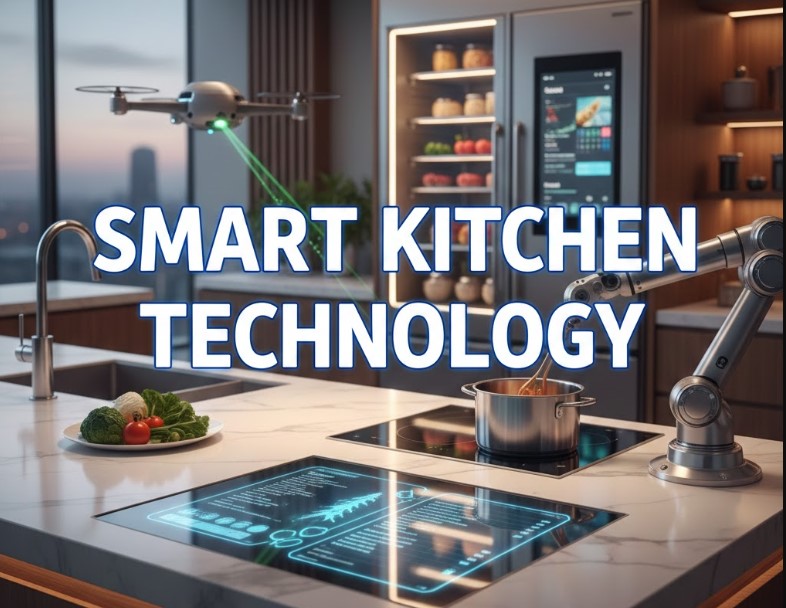
Smart kitchen technology represents the integration of advanced networking and computing capabilities (the Internet of Things (IoT) and Artificial Intelligence (AI)), into everyday kitchen appliances and tools.
This goes far beyond a simple digital display; it is about creating a symbiotic relationship between you and your cooking space.
Appliances are no longer isolated workhorses; they are part of a unified network, communicating with each other and with you, to simplify complex tasks and enhance the overall culinary experience.
The goal is to eliminate guesswork, reduce waste, and free up valuable time, transforming the kitchen from a source of stress into a hub of creativity and connection.
The evolution of the kitchen has always mirrored the arc of human innovation, from the discovery of fire to the invention of the electric stove.
Today, we stand at the precipice of a new, exhilarating era, where smart kitchen technology is not just a futuristic concept but a tangible reality transforming the heart of the modern home. The fundamental question for every homeowner is no longer if they will integrate this technology, but how and when.
This intelligent revolution is reshaping our daily routines, making cooking more efficient, enjoyable, and sustainable than ever before. It’s a dynamic shift from a purely functional space to an interconnected, intuitive, and highly personalized culinary ecosystem.
The Core Pillars of Smart Kitchen Technology
The dynamic landscape of smart kitchen technology is fundamentally defined by three interconnected core pillars. These pillars (Automation and Convenience, Efficiency and Sustainability, and Personalized Culinary Guidance), work in concert to deliver a modern, intuitive, and highly functional culinary space.
Expanding on each of these pillars reveals the profound ways in which the Internet of Things (IoT) and Artificial Intelligence (AI) are moving beyond novelty to become essential components of the contemporary home.
Automation and Convenience
The pillar of Automation and Convenience revolves around minimizing the user’s physical effort and mental load in the kitchen, effectively providing a virtual sous chef to handle routine and time-consuming tasks.
This is achieved through seamless interconnectivity and intelligent remote control. The ability to manage critical appliances from anywhere via a smartphone or smart hub offers a paradigm shift in time management.
For instance, a smart oven can be preheated on the commute home, ensuring it’s at the exact required temperature the moment the user walks in the door, eliminating wasted time waiting for the appliance to catch up.
Beyond simple remote activation, modern smart kitchen technology excels at hands-free operation. Voice-activated controls are critical in the kitchen, a space where hands are often dirty, wet, or occupied with food prep.
A simple voice command can adjust a cooking timer, pause a cycle, or pull up a recipe on an integrated screen, allowing the cooking process to continue uninterrupted and focusing the user’s attention entirely on the task at hand.
Furthermore, smart multi-function appliances, like connected cookers and blenders, incorporate pre-set, algorithm-driven programs that automatically adjust temperature, time, and power based on the food type or desired result, removing the guesswork and ensuring consistent quality, transforming complex recipes into straightforward, automated sequences.
Efficiency and Sustainability
Efficiency and Sustainability represent the crucial financial and environmental benefits of adopting smart kitchen technology. This pillar is built on the foundation of data monitoring and optimization to conserve resources and reduce waste, making the kitchen more cost-effective and eco-friendlier.
The most tangible example is Intelligent Inventory Management, which is spearheaded by the smart refrigerator. Equipped with internal cameras and sophisticated sensors, these refrigerators track contents, monitor freshness, and actively generate a digital inventory.
They can alert the user to items nearing their expiration date and even create dynamic shopping lists based on what is genuinely missing, dramatically curbing impulse purchases and, most importantly, minimizing the food waste that results from forgotten or spoiled ingredients.
In terms of energy and water conservation, smart appliances are engineered to perform tasks using the minimum required resources.
Smart dishwashers, for example, utilize sensors to detect the soil level of the dishes and determine the optimal wash cycle, temperature, and water volume, rather than relying on a fixed, often wasteful, default setting.
Similarly, smart induction cooktops only heat the vessel and its contents, not the surrounding air, resulting in significant energy savings compared to traditional electric or gas ranges.
This focus on precision utility consumption translates directly into lower household operating costs and a reduced environmental footprint, making the adoption of smart kitchen technology an investment in planetary health as well as personal savings.
Personalized Culinary Guidance: The AI-Powered Chef
The most advanced and future-forward pillar of smart kitchen technology is Personalized Culinary Guidance, which leverages Artificial Intelligence (AI) and Machine Learning (ML) to create a deeply customized and adaptive cooking experience.
This goes far beyond mere digital recipes; it involves a system that learns the user’s specific culinary profile. The AI considers factors like dietary restrictions (allergies, vegan, low-carb), learned flavor preferences (spicy, savory, mild), and cooking skill level to proactively suggest meal plans and recipes.
These systems can dynamically adapt recipes in real-time. If a key ingredient is missing, the system can instantly suggest an appropriate, nutritionally equivalent substitute from the current inventory.
Furthermore, precision cooking tools, such as smart meat probes and integrated temperature sensors in ovens and cooktops, provide real-time feedback that ensures perfect results.
These devices communicate directly with the appliance’s control unit, maintaining the precise degree required for a flawless outcome and eliminating the common frustration of over- or under-cooked food.
This AI-powered guidance acts as a continuous learning tool, building user confidence and expanding their culinary repertoire by making professional-level precision and bespoke recipe creation accessible to the everyday home chef.
Must-Have Gadgets for the Smart Kitchen Ecosystem
The integration of the Internet of Things (IoT) into our culinary spaces has birthed a diverse array of must-have gadgets, each contributing a unique element to the seamless, efficient, and intelligent operation of the modern kitchen.
These devices are the physical manifestation of smart kitchen technology, moving the concept from theory to daily practice. From large, multi-functional appliances to small, precision-focused tools, the ecosystem is built for both the novice cook and the seasoned culinary expert.
Smart Refrigerators
The smart refrigerator is arguably the most recognizable and impactful piece of smart kitchen technology. Far from being just an appliance that keeps food cold, it transforms into the kitchen’s central command center and inventory manager.
Equipped with internal cameras, a Wi-Fi connection, and a large exterior touchscreen, these fridges allow users to check their contents remotely via a smartphone app while they are at the grocery store, eliminating the frustrating scenario of double-buying ingredients or forgetting a crucial item.
Beyond simple viewing, advanced models utilize AI-powered image recognition to track food items, monitor expiration dates, and even send proactive alerts when a staple ingredient, like milk or eggs, is running low based on learned usage patterns.
The external display often integrates with the home’s smart assistant, serving as a hub for managing family calendars, leaving digital notes, streaming music or video tutorials while cooking, and even coordinating with other smart appliances, cementing its role as the intellectual and organizational heart of the connected kitchen.
This level of oversight significantly reduces food waste, making the refrigerator a cornerstone of the sustainability goals inherent in smart kitchen technology.
Smart Ovens and Ranges
The modern smart oven or range takes the traditional chore of baking and roasting and elevates it to a level of automated precision previously reserved for professional kitchens.
The core value lies in remote control and monitoring, allowing users to preheat the oven on the drive home from work, adjust the cooking temperature from another room, or turn the appliance off entirely if they forget to do so before leaving the house, all managed through a dedicated mobile app.
Furthermore, many models feature integrated food probes that communicate in real-time with the oven’s control system, ensuring that meat, poultry, or roasts are cooked to the exact desired internal temperature without the user having to open the door, which maintains heat and moisture.
These appliances come loaded with guided cooking programs or ‘scan-to-cook’ features, where scanning the barcode of a pre-packaged food item automatically sets the optimal temperature, cooking mode (like convection or air fry), and duration, democratizing consistently good cooking results for pre-packaged meals.
Some high-end ovens even include internal cameras that allow users to check on their dish’s browning and progress without ever opening the door, a small yet highly convenient feature that contributes to the efficiency and precision of smart kitchen technology.
Smart Countertop Appliances
While large appliances manage the bulk of cooking, smart countertop gadgets bring specialized intelligence to daily tasks, proving that smart kitchen technology comes in all sizes. The most popular of these include smart multi-cookers and dedicated smart ovens.
Smart multi-cookers (which combine pressure cooking, slow cooking, steaming, and more) are Wi-Fi-enabled, allowing users to initiate a cooking program, monitor the progress, and receive alerts directly on their phone.
This is invaluable for complex recipes that require multiple steps and precise timing, ensuring that the entire meal is executed flawlessly even when the user is engaged in other activities.
Similarly, smart countertop ovens often integrate multiple cooking methods like air frying, baking, and steaming, all managed via an app.
What makes them “smart” is their ability to run guided programs and even integrate with meal kit services, where the oven automatically reads a code on the meal package and customizes its cooking parameters to deliver a perfect, no-fail dish.
This class of gadgets is the entry point for many homes, offering substantial convenience and culinary guidance with a relatively small footprint and investment in smart kitchen technology.
Connected Coffee Stations
For many, the morning coffee ritual is non-negotiable, and smart kitchen technology has optimized this experience for convenience and personalization. Connected coffee makers and espresso machines can be programmed or remotely activated via voice command or a smartphone app.
This allows the user to wake up to a fresh, hot brew without delay, a simple but powerful automation that significantly enhances daily convenience. More advanced models feature customization at an unparalleled level, allowing users to precisely control brew strength, water temperature, and even the ratio of espresso to milk foam.
Furthermore, some systems integrate automatic grinding and dosing capabilities, ensuring maximum freshness while minimizing manual effort.
The ability of these devices to learn and save multiple user preferences ensures that every member of the household can initiate their perfect, highly personalized morning beverage with a single command, showcasing how smart kitchen technology caters to individual daily needs.
Precision Cooking Tools: The Accuracy Enhancers
Beyond the major appliances, the ecosystem is solidified by small, highly accurate tools that inject scientific precision into the cooking process, demonstrating the commitment of smart kitchen technology to consistent quality.
Chief among these are wireless smart meat thermometers and smart scales. The wireless thermometer is entirely battery-powered and connects to a smartphone app, tracking the internal temperature of a protein throughout the cooking cycle (whether in the oven, grill, or smoker) and calculating the remaining cooking time.
It alerts the user when the food reaches the exact target temperature, preventing both over- and under-cooking. The smart scale, on the other hand, connects to recipe apps, guiding the user to weigh ingredients with minute accuracy (e.g., to $0.1$ gram), which is vital for successful baking or delicate recipes.
It can often zero out ingredients automatically as they are added, and even convert measurements instantly. These precision tools remove the inherent variability and uncertainty from manual cooking, ensuring reproducible, restaurant-quality results and serving as the backbone for the accuracy promised by smart kitchen technology.
Smart Sous Vide Precision Cookers
The Sous Vide Precision Cooker, often a sleek immersion circulator, is a device that has transitioned from high-end restaurant use to being an accessible and essential piece of smart kitchen technology for the home chef. Its primary function is to heat and circulate water in a cooking vessel to a precisely maintained temperature.
What makes it smart is its Wi-Fi or Bluetooth connectivity, which allows users to control and monitor the cooking process entirely from a smartphone app.
This enables hands-off cooking, the user seals the food in a bag, submerges it, and can then leave the house or focus on other meal prep tasks while the device guarantees the food is cooked perfectly and consistently edge-to-edge.
The companion app typically includes guided recipes and ideal temperature/time settings for nearly any type of food, making gourmet results, such as perfectly tender meats or vibrant, crisp vegetables, easily repeatable.
Smart Air Fryers
The air fryer has become a ubiquitous countertop appliance, and its smart iteration is an indispensable piece of modern smart kitchen technology. Smart air fryers connect to a mobile app, giving users the ability to start, stop, pause, and monitor the cooking process remotely.
More critically, the smart connectivity provides access to a vast, ever-growing library of pre-set programs and recipes.
The user can select a recipe in the app, and the appliance automatically programs the exact combination of temperature, time, and fan speed needed for perfect results, eliminating the need to consult paper manuals or manually adjust controls.
Furthermore, some models integrate with voice assistants, allowing for hands-free operation and cooking notifications. This combination of convenience, precision, and the promotion of healthier, low-oil cooking solidifies the smart air fryer’s place as a must-have gadget in a high-tech kitchen.
Smart Faucets and Water Dispensers
Smart faucets and dedicated smart water dispensers focus on key aspects of smart kitchen technology often overlooked: hygiene, conservation, and convenience.
Smart faucets are typically activated via motion sensors or voice commands, allowing the user to turn the water on or off without touching the handle, which is a significant boost to kitchen hygiene, especially when handling raw ingredients.
Beyond simple touchless operation, advanced models can dispense water at an exact, user-specified temperature and even pour an exact measured volume (e.g., eight ounces or one liter) on command, streamlining everything from filling a saucepan to making formula.
Similarly, smart water dispensers and purifiers not only provide filtered water but also monitor filter life, track consumption, and offer customizable temperature settings for hot beverages, all managed and reported through an app, ensuring peak water quality and efficiency.
Smart Mixers and Blenders
Even classic prep tools have been revolutionized by smart kitchen technology. Smart stand mixers and high-powered smart blenders bring automation and guidance to ingredient preparation.
A cutting-edge smart mixer often features a built-in digital scale that works in conjunction with guided recipes, ensuring baking ingredients are measured with flawless accuracy. The mixer can automatically adjust speed and torque based on the recipe stage, preventing user error and maximizing efficiency.
Smart blenders frequently connect to an app that offers pre-programmed cycles optimized for specific tasks, like soup, nut butter, or smoothies.
They can even communicate nutritional data by integrating with smart scales, providing users with instant caloric or macro-nutrient breakdowns of their creations, transforming a simple tool into an active part of a health and wellness regimen.
Smart Temperature Control Mugs and Kettles
While connected coffee makers handle the brewing, smart mugs and kettles manage the post-brew experience, focusing on maintaining optimal temperatures, a key element of beverage enjoyment and efficiency.
A smart mug is battery-powered and controlled via an app, allowing the user to set and maintain their coffee or tea at their ideal drinking temperature for an extended period, preventing the frustration of a quickly cooling drink.
Similarly, smart electric kettles offer precise digital temperature control, enabling users to heat water to the exact temperature required for different types of tea or pour-over coffee, often controlled remotely so the hot water is ready exactly when they need it.
This attention to thermal detail ensures every sip is perfect and represents the micro-level dedication to perfection found within smart kitchen technology.
Building Your Smart Kitchen on a Budget
The idea of a fully integrated, high-tech kitchen might sound intimidatingly expensive, but embracing smart kitchen technology doesn’t require a complete renovation or unlimited funds. You can implement the “smart” functionality gradually and affordably.
Start with Smart Plugs and Voice Control
The easiest and most cost-effective entry point is with smart plugs. These simple devices allow you to control any traditional appliance (like a coffee maker or a slow cooker) using a smartphone app or a voice assistant hub.
For a small investment, you instantly gain remote control and scheduling capabilities, simulating the functionality of a much more expensive smart appliance. Pairing a few smart plugs with an affordable voice assistant hub creates a powerful, hands-free control center.
Focus on Smart Countertop Appliances
Instead of replacing a major appliance, start with a versatile, high-impact countertop gadget. A smart multi-cooker or an AI-enabled mini-oven offers incredible value, often combining the functions of a pressure cooker, slow cooker, and air fryer into one connected device.
These offer app-based recipe guidance and precise temperature control, introducing high-tech cooking without the need for a major utility overhaul.
Prioritize Smart Safety and Efficiency
Small investments in safety and efficiency can quickly pay for themselves. Look for smart smoke or carbon monoxide detectors that can alert your phone even when you are away.
Consider an energy-monitoring device that plugs into your main circuit board to provide real-time data on which appliances are drawing the most power, allowing you to make smarter usage decisions.
The Future of Smart Kitchen Technology
The current advancements in smart kitchen technology are just the beginning. The industry is rapidly moving towards an even more interconnected and intuitive culinary landscape, driven by machine learning and ambient intelligence.
- Proactive Kitchen Ecosystems: In the near future, your kitchen won’t just react to your commands; it will anticipate them. Imagine a kitchen where the oven preheats based on traffic delays and your usual dinner time, or a pantry system that automatically triggers a grocery order when stock is low, based on your consumption habits.
- Flexible and Integrated Surfaces: Countertops will become fully integrated induction cooking surfaces, capable of heating cookware only when placed on designated zones. The same surface will function as an interactive recipe display and a food weighing scale, making the traditional stove and cutting board a single, dynamic workspace.
- The Health and Wellness Hub: The kitchen will evolve into a personalized health coach. AI systems will not only track your nutritional intake but will also suggest micro-personalized recipes tailored to your specific health goals, genetics, and real-time biometric data. This could include automated portion control or immediate alerts about food allergens in a suggested recipe.
- Advanced Waste Management: Next-generation composting and recycling systems will be fully automated, sorting waste and processing food scraps with minimal user interaction, moving kitchens toward a true zero-waste ideal.
The future of smart kitchen technology envisions a place that is proactive, deeply personalized, and almost invisible in its operation, moving beyond simple automation to become a collaborative partner in domestic life.
Conclusion
Smart kitchen technology is fundamentally changing the equation for home cooking. It’s not just about flashy gadgets; it’s about a profound shift toward convenience, efficiency, and personalization. By making cooking easier, reducing food and energy waste, and providing expert culinary guidance, these intelligent systems empower everyone, regardless of their skill level, to achieve better results and a more sustainable lifestyle.